

What Does AXR Mean? The Rootstock Story That Defines Us
There is a name on the bottle, and then there is the story behind the name. Most people who visit AXR Napa Valley for the first time ask the same question before they have even finished their first pour: What does AXR actually mean? It is a fair question. The name does not gesture at a family surname or a romantic founding myth. It sounds almost scientific. That is exactly the point. AXR is rooted, literally, in one of the most dramatic chapters in the history of wine. Understanding the name means understanding why Napa Valley exists the way it does today.
A Tiny Insect That Nearly Ended Everything
To understand AXR, you have to go back to the 1860s. Phylloxera is a microscopic, aphid-like insect that feeds on the roots of grapevines. Starting in France and spreading through Europe over the following decades, it systematically destroyed the vineyards that had been producing the world’s great wines for centuries. Bordeaux. Burgundy. Champagne. Wiped out, row by row. The insect made its way to California shortly after. By the late 19th century, it had begun to devastate the young wine industry taking root in Napa Valley. The region’s winemakers faced a choice: give up, or find a solution. They found a solution.
Enter Victor Ganzin and the AxR1 Rootstock
In 1879, a French horticulturist named Victor Ganzin developed a hybrid rootstock by crossing two grape varieties: Aramon and Rupestris. The designation: AxR1, short for Aramon x Rupestris, Number 1. Vines grafted onto this rootstock were believed to be resistant to phylloxera, allowing viticulture to survive the plague. For a time, it worked. The AxR1 rootstock gained widespread adoption in California. During the post-Prohibition wine revival of the 1970s, Napa Valley saw a surge in new plantings, many of them on AxR1. Napa Valley was growing. Confidence was high. The crisis felt like ancient history. It was not. “The rise and fall of the AxR1 rootstock proves the need for adaptability and ongoing research in viticulture.”
The Second Wave and the Comeback That Built Modern Napa Valley
By the mid-1980s, vines that should have been thriving were failing. The AxR1 rootstock was not as phylloxera-resistant as believed. A new strain was breaking through the supposed immunity. Vines began dying again. The economic damage was staggering. But rather than collapse, Napa Valley used the forced replanting as an opportunity to rethink everything: which varietals belonged where, which rootstocks were genuinely resilient, and how the winemaker’s role needed to extend from the cellar all the way into the vineyard. The crisis accelerated a revolution in viticultural science that ultimately solidified Napa Valley’s reputation as one of the great wine regions on earth. Napa Valley did not just survive phylloxera twice. It emerged stronger, smarter, and more intentional than it had ever been.
Why We Chose This Name
When Kelly Trevethan, Mark Schratz, Don Van Laeken, and Jean Hoefliger sat down at Bardessono in Yountville in October 2015, they knew they wanted to build something that stood for more than a good bottle of wine. They wanted to honor the history of this valley. The struggle and the resilience. The people who refused to give up when a microscopic insect threatened to end everything they had built.
AXR Napa Valley takes its name from the AxR1 rootstock. Not because the rootstock fully succeeded, but because of what happened after it failed. The response to adversity is often more defining than the adversity itself. The best chapters in Napa Valley’s story were not written in the easy years. That is the spirit the four founders carried forward: authenticity over pretension, resilience over comfort, a deep respect for where they came from, and an unrelenting drive toward what they could become. “I define AXR Napa Valley as the center of happiness of my life’s work.” Jean Hoefliger, Winemaker and Partner
What the Name Means Every Time You Open a Bottle
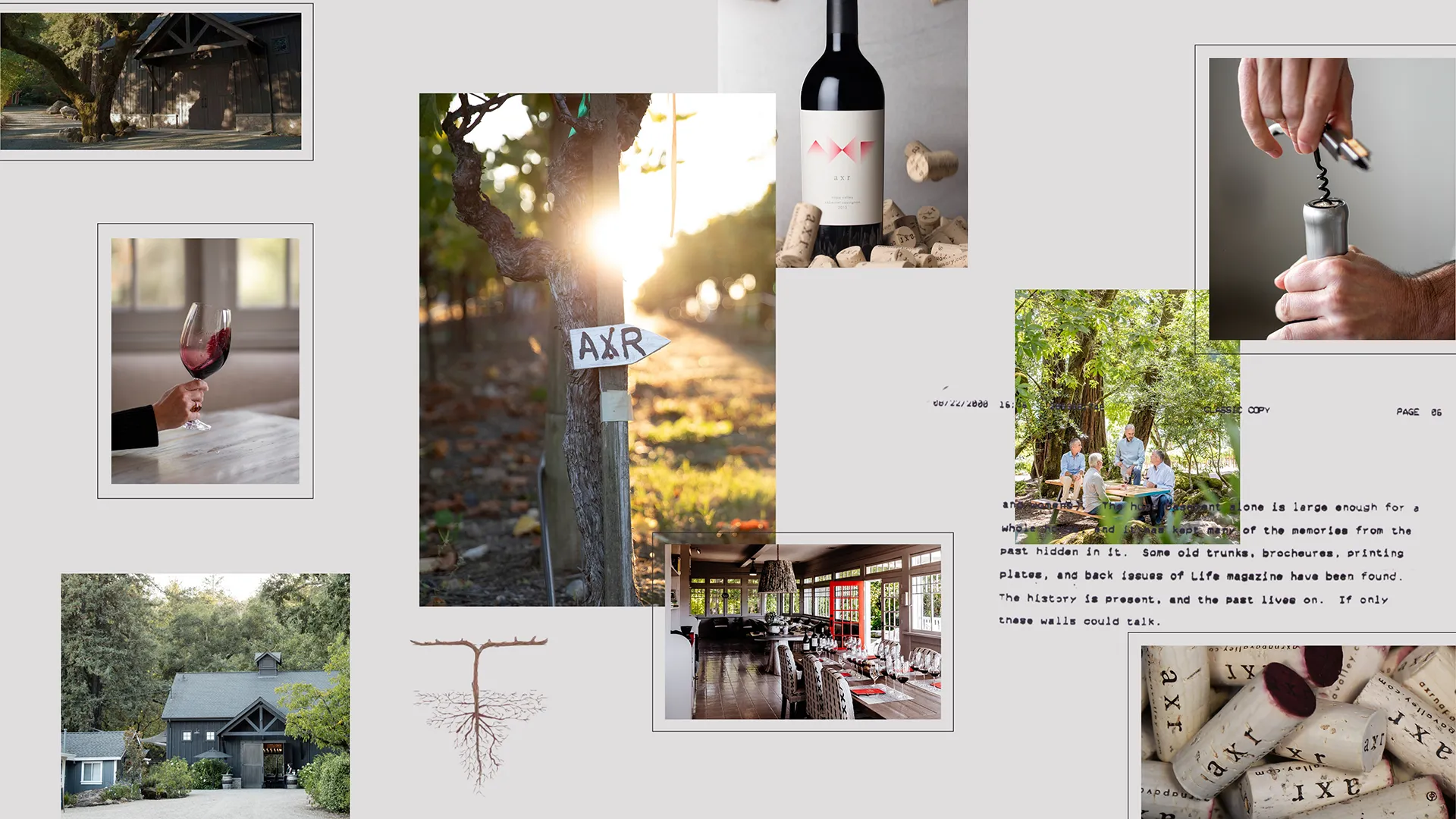
When you pour an AXR Napa Valley wine, you are participating in a lineage. One that runs from a French horticulturist working against a plague in 1879, through the vineyards that nearly failed in the 1980s, to a team of four people who decided that all of that history deserved to be honored and pushed further. The AXR estate sits on a pre-Prohibition site in the heart of St. Helena, along Highway 29 in Napa Valley. The history is not just in the name. It is in the gravel underfoot, the structure of the land, the vines growing here today on rootstocks chosen with hard-won knowledge. Every tasting at AXR is, in some way, a walk through that history.
> Ready to taste the story? Book your AXR tasting at axrnapavalley.com/visit


JOIN THE MAILING LIST
Join our mailing list and become part of our community. As a new supporter, you’ll receive exclusive wine offers, invitations to special events, and updates on everything happening at our estate. Stay connected and experience the exceptional wines and unique stories that define AXR Napa Valley.